



Spring Grass, Weight Gain and Management Ideas
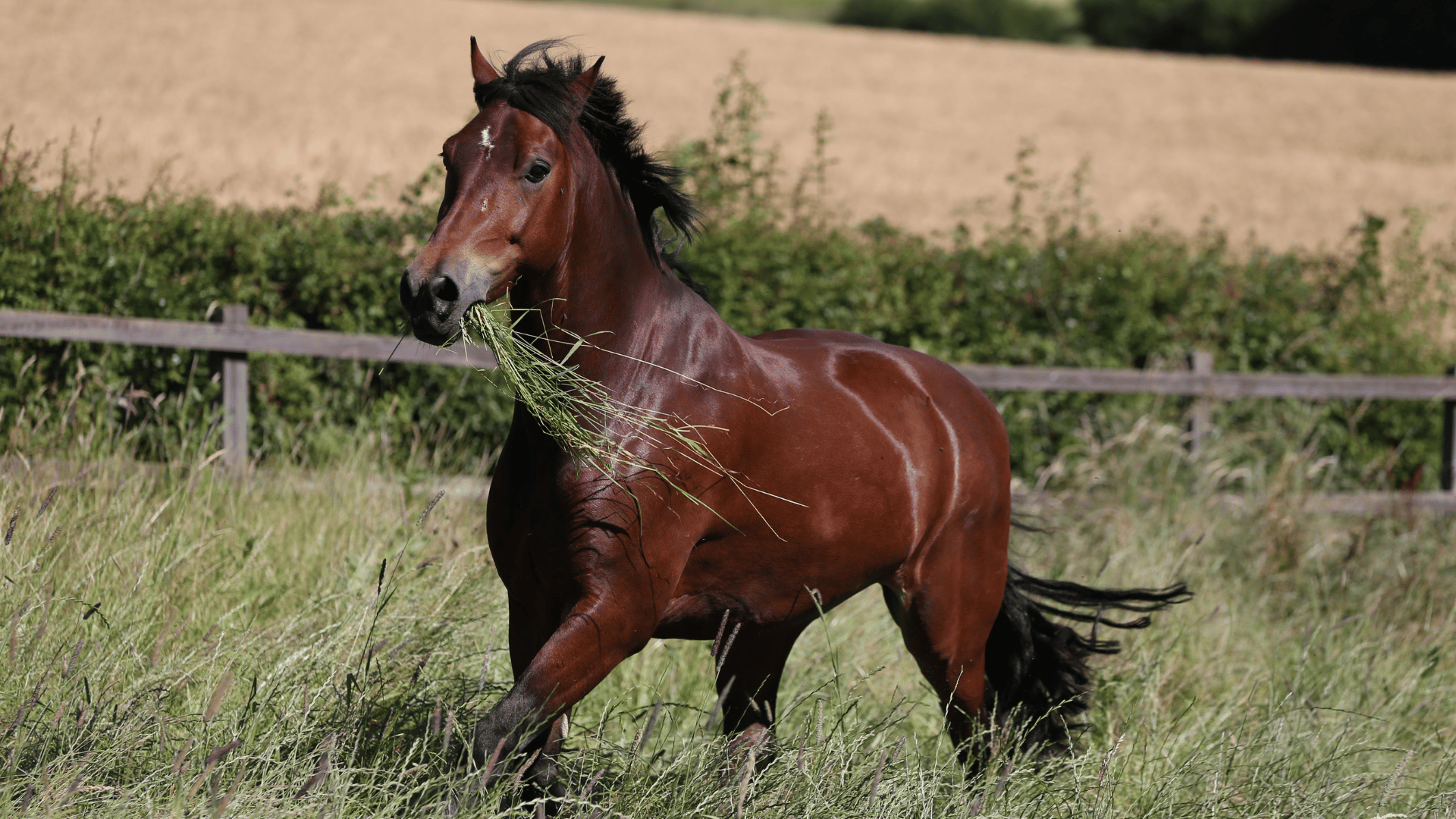
With a reputation for being grass guzzlers, some ponies have been shown to consume up to 5% of their bodyweight in grass (dry matter) each day! This would be a massive 12.5kg of dry matter (DM) for a 250kg pony! It’s no wonder some good doers gain so much weight when spring grass arrives, and some horses aren’t far behind in the grass consumption race.
If the calories/energy they consume from their diet is consistently higher than the energy they burn off through exercise, keeping warm and basic bodily function – known as ‘basal metabolic rate’ – then this leads to weight gain.
Obesity rates could be as high as 70% in some populations of ponies and excess weight increases the risk of several health conditions, including laminitis. It’s vital we try and keep grass intake under control.
Spring Grass by Numbers:
- Spring grass can easily provide 11 MJ DE per kilo (DM) – equivalent to competition feeds.
- A 250kg pony could consume enough energy to fuel a 500kg racehorse, that’s over half a bag of conditioning cubes every day!
- A 250kg pony might consume 2kg of simple sugars per day from grass alone (and almost 4.5kg of WSC)!
- Grass may contain 15% simple sugars and 35% WSC – Water Soluble Carbohydrate.
- Ponies on 24/7 grazing could gain 16% of their bodyweight in just 6 weeks – like an 11st human gaining almost 2st!
- Ponies can eat almost 1% of their bodyweight in just 3 hours at grass!
Cut Calories Not Fibre
Horse and ponies are grazers and have evolved to eat low calorie forage, slowly. You may need to be creative with their management, especially for those at risk of obesity and related health issues. Consider some of the following ideas:
- Install a strip grazing system: reducing the area helps to limit grass availability.
- Turn out at night: typically grass will contain less sugar overnight.
- Restrict turnout time but remember! Ponies can learn to maximise their time eating and consume 66% of their total requirement in just 3 hours!
- Try a grazing muzzle: they could reduce grass intake by up to 80%!
- Set up a track system: creative track systems can increase movement and enrichment while restricting calorie intake.
- Soak hay: soaking hay reduces the sugars and calories from the forage – although results do vary.
- Consider feeding up to 50% straw: lower in calories but higher in fibre it takes longer to eat. Introduce it gradually and avoid it for those with dental concerns or a history of colic.
- Choose an alternative safe source of forage: for those at very high risk of laminitis consider feeding them a suitable forage replacer with guaranteed low starch and sugar levels.
- Increase exercise: regular exercise supports a healthy metabolism.
For help keeping your good doer happy and healthy check out the SPILLERS Slimmers’ Hub or our SPILLERS Slimmers’ facebook group for support and tips from a likeminded community.