



Show Hunter Classes Explained
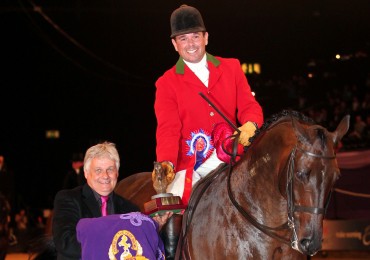
Supreme Products sponsored rider Robert Walker has had great success in the show ring with his show hunters taking many major titles up and down the country, but what makes a show hunter and which section do you enter at a show? Here Robert offers advice on which hunter class to enter and what the judge will be looking for.
Which class should I enter?
A show hunter class is categorised into different weight sections: lightweight, middleweight, heavyweight and small hunter.
The lightweight hunter should have plenty of presence and be a good mover, possess an elegant yet workman like quality. I think a horse that is seven-eighths or full thoroughbred is ideal.
The judge will be looking for a lightweight hunter to be light in the hand and very mannerly with a good comfortable stride. The horse will be judged on its movement, including the gallop, so you need to make sure that your horse has the wow factor when in the ring. Typically a ladies horse, the lightweight hunter can also compete in Ladies Hunter Classes, side-saddle.
The lightweight should be able to carry 12st 7Ib with a height of 16hh – 16.2hh, and have around eight inches of bone, so if your horse does not possess these qualities then I would advise you to compete in a different hunter weight class.
If your horse is over 16.2hh with around nine inches of bone, he may be more suited to the middleweight section of the hunter classes, and should be capable of carrying up to 14 stone.
I like to see a deeper girth with this type of horse, and the middle weight should still be elegant, mannerly and give a very good ride.
Like the lightweight classes, the middle weight hunter will be judged on its way of going, presence and “look at me” quality.
A good heavyweight sort is hard to find but if your horse is over 17hh, with more than nine-and-a-half inches of bone, you may own one of these rare commodities.
Although heavier than its counterparts, the heavyweight should still have handsome looks and good paces. This big upstanding type of a horse is still required to move well, be light on its feet and cover the ground well.
If your horse stands under 15.2hh, you may be able to compete in small hunter classes.
I like a small hunter to resemble a miniature middleweight, and have the same quality and good manners. These classes are very popular with riders and so it is important that your horse has plenty of ring presence so that it stands out from the crowd.
If you want to compete at affiliated shows in Small Hunter classes your horse must posses a life height certificate.
What to do in a hunter class
Depending on the type of show, there should be two judges in the ring; one for ride and the other for conformation.
Whether competing at local, county or championship shows, all competitors will be expected to walk, trot, canter and gallop as a ride. This is your chance to really show off your horse’s movement and get yourself noticed. It is important that you always maintain space around you and never find yourself boxed in or crowded, as this lowers the chance of the judge looking at you.
The judge will then pull the ride in to line, in order of preference and will ride your horse individually and mark him on manners, movement, lightness, acceptance and willingness to please.
After this stage you are then required to pull your horse out of line, so that the confirmation judge can assess the way your horse is put together and how true to type he is.
The final go round will then see the judges pull you in to the final line up – did you win – or do you have to come back another day?